Integrative Health Coach Blog About Healthy Living Choices
Practical Thoughts About Chronic Illness Medication Costs

Too many of us are being impacted by chronic illness medication costs. This is my story. A few weeks ago after a covid infection, my asthma went from a periodic after a respiratory infection to a daily occurrence that was wearing me out, and interfered with exercise and my energy levels. I was on a rescue inhaler and a high dose steroid inhaler that just wasn’t allowing me to be symptom free. My primary care doctor, referred me to a pulmonologist. After a two month wait, I sat down with her.
The good news was that she took one of the best histories and review of symptoms I have had from a physician. I felt like she totally had my story of past and current health issues in a few minutes. Her suggestion was to step up my treatment to an inhaler with 3 drug combo: Trelegy. Later I discovered it was after insurance $117 a month. For me after two weeks, I was no better and my coughing worse after using it.
She switched me to another inhaler Spiriva and said to continue the Breo Ellipta at a $100 a month, plus the rescue inhaler. A trip to the pharmacy revealed the Spiriva was not covered by Medicare part D and was $650 for 30 days. I couldn’t afford to add it to my already growing chronic illness medication costs budget for the year so I didn’t get it filled.
Back to the pulmonologist who prescribed five days of prednisone- total cost to me after insurance 33 cents! Yep 33 cents….. Three days later my asthma was completely controlled by my two regular inhalers.
As a retired health care provider, in my medical training, chronic illness medication costs were always a consideration for my patients. While today’s physicians are well trained, this pretense that either they don’t know how much the drugs cost, or don’t want to know or are helpless to do anything about it, is one of the saddest derelictions of duty in today’s world. In my situation rather than using newer uncovered drugs, a short course of prednisone would have given me the immediate, inexpensive solution. She should have known and recommended that.
As we take on more of our self care responsibilities, when looking at prescription recommendations, we need to be asking physicians and pharmacies, is there a more affordable option?
Finally I just reviewed my husband’s meds for reflux and had him switched from a drug called Dexilant that runs over a $100 a month, to Protonix at $2 a month.
Breakthrough Covid in Seniors: The Threat Nobody is Talking About

From Breakthrough to Breakdown: The Unprecedented Covid-Induced Threat for Seniors 65 and Up
After getting two Pfizer shots and a booster, you can imagine my surprise when two weeks later I experienced breakthrough Covid in seniors for myself. I had assumed that with a full load of the vaccine on board, that it was highly unlikely I would get Covid. That turned out to be a false and dangerous assumption. I contracted Covid two weeks after getting my booster, and here’s the story of how I think it happened.
I traveled to Colorado to put on an annual retreat for women. I was a bit concerned when I hit the Burbank terminal to fly to Denver. It was jammed packed, the flight was oversold and we were shoulder to shoulder on the plane. It certainly seemed like a likely place to contract breakthrough Covid in seniors! After landing in Denver on a hot September day, I found a mini-disaster at the car rental place next to the airport. There were at least 100 people in a long line snaking outside the building. Many of the customers were not wearing masks defiantly. Two and a half hours later I finally had a car. There was not enough clerical help or cars that day. When I finally got to the front desk, I asked if this was just a bad day here? The clerk said, “Oh no. It’s like this every day.” As I left my thought was, here is another example of how Covid has broken the car rental industry.
The next day I headed up into the mountains for my retreat at C Lazy U Ranch. The retreat was great until the second to last day, when I developed some sniffles and a slight cough. I assumed I was having allergies from the wind, blowing ash, and being outside all day. On the final day, I am feeling suddenly exhausted. I stop at friends for dinner and find that I need to take a nap before joining them for dinner.
The next day I head out before the sun is up to drive back to Denver. Halfway through the flight, I realize I might be getting sick. Now I have a slight sore throat and a little more cough. I land in Burbank and go directly to urgent care for an instant Covid test. I have to do this because my husband has two chronic conditions that would put him at high risk for hospitalization. That night I learn my test is negative, but I start running a slight fever. I sleep downstairs, alone with a mask on all night.
The next day I go back for a second test that is positive. The dreaded breakthrough Covid in seniors is officially happening to me. I continue to quarantine as my symptoms increase. Body aches, more and more coughing, and now a total loss of taste and smell. A couple of nights later, I wake up with intense coughing and a feeling of pressure in my chest—like someone is sitting on me. I am starting to panic now. With the vaccines and the booster on board I had believed I would be protected, but my reality was as the days wore on my symptoms were worsening. Now at day 5, I decided my best bet was the ER.
I am over 65 and have two chronic conditions—pre-diabetes and a long history of chronic asthma—that are controlled typically with a couple of inhalers unless I develop a respiratory virus. I figured the only other treatment that might stop my progression was an infusion of monoclonal antibodies. This is typically given for mild to moderate Covid for people over 65 at risk for complications.
I head out to the local ER at 7 am. At the entrance, it is just me and a young man who is screaming and cursing at the triage nurse demanding immediate care. I tell the nurse he can go first while I sit outside since I have Covid. Thirty minutes later I am in an isolation room inside the ER. The nurse briefly listens to my lungs and hooks me up to the monitors. I am complaining of shortness of breath and chest pain. Blood is drawn, an IV is started, and chest X-rays and an EKG are ordered. No one has taken a medication history. I haven’t seen a doctor yet. A couple of hours later, a physician sticks her head in the door and says you are well enough to go home as your EKG, Chest X-ray and blood work are ok.
Still no history or exam. I say, “Before I go home since my asthma has worsened so much, could I please have the monoclonal antibodies?” She says “Let me check if you meet the criteria.”
Another hour later, she pops her head in again to say, “You can get them, although it will take a few hours.” At this point, I tell her I want them. It takes an hour to mix them up via the pharmacy, 90 minutes to infuse, and then another hour of waiting for a reaction. The infusion pump monitor keeps blaring as it misfires. A nurse shouts through the door, she is too busy now to put on a gown and reset the monitor. By early afternoon I am discharged. I feel about the same, but am counting on the monoclonal antibodies stopping the progression of the infection. Forty-eight hours later, I am feeling better. Still cough uncontrollably at times, but my lungs are dry—no fluid. No fever.
My symptoms slowly subside and the asthma is controlled with standard asthma meds including-at-home respiratory treatments and prednisone. Slowly my taste and smell return. My fatigue is one of the first symptoms to resolve. At five weeks, I am able to exercise without increasing my symptoms. I still have asthma but that is not uncommon for me after a respiratory infection—which is exactly what breakthrough Covid in seniors is.
Thinking back, I can’t imagine how this would have gone for me without the protection offered by the vaccines and booster. I am grateful I was vaccinated and was able to get good care at the ER. For people like me who are older with chronic medical conditions, if you experience breakthrough Covid in seniors, you’ll need to have a plan for quarantining, self-care, plenty of meds for chronic conditions if they worsen, and good access to quality healthcare at your ER.
Bottom Line: If you are 65 or older or have family members who are 65 or older, do not underestimate the contagiousness of the Delta variant. For those of us who are 65 or older with chronic medical conditions, this can end your life in short order. If you do experience breakthrough Covid in seniors (yourself or your family), access the ER as needed, be ready to quarantine, and take care of yourself. As an asthmatic, I had a home nebulizer with my vials of albuterol as well as short-acting and long-acting inhalers. As soon as I got sick, I started pushing fluids and getting plenty of rest. I wore a mask indoors almost the entire time before I got sick but still got breakthrough Covid in seniors. I believe it speaks to just how contagious the Delta variant has proven to be.
Finally, after experiencing the Covid-induced trail of “broken systems” that include airports, airlines, car rental agencies, emergency rooms, restaurants, and hotels, I can only conclude that it marks the death of a unified governing policy defaulting to cities, states and businesses left to craft their own unaligned, uncoordinated, poorly conceived and destined to fail micro-policies. As a retired health care provider, this is the most disturbing truth about this horrific pandemic. It represents a tragic setback in our long-standing commitment to public health, a loss that could come to haunt us for decades.

Mindful Eating Strategies: Best Bites First

Click To Enlarge
Saving the best bites for last is overrated and ultimately, a path to overeating. In mindful eating, best bites come first. Why? Eating the best part of the meal when the food is the freshest, at its ideal temperature and looks the most appetizing is the prized moment of any meal. As important, eating best bites first makes it more likely that you will use fullness as a signal to stop eating and leave food on your plate.
Here’s more information on Mindful Eating for Women’s Self Coaching Cards…
Mindful Eating Strategies: Shift Out of Autopilot

It’s easy to zone out when you’re eating, especially if you’re eating food for stimulation or comfort. Just the anticipation of eating alone triggers a surge of dopamine to the prefrontal cortex, which amplifies the expected pleasure of the pending experience. That’s not necessarily a bad thing. We all want to enjoy our meals. But the problem lies in the way autopilot eating deeply distracts you from other choices which are essential to improving and and protecting your health.
Topping the list is autopilot eating’s ability to make you lose track of proportions, satiety and frequency. So, you quickly wind up eating too much, still feeling strangely hungry and before you know it, getting ready to eat more food. The bad news is that this dopamine-driven closed loop haunts everyone who is struggling to make better choices about food. The good news is that mindful eating can help you adopt a “transformative habit” that disrupts this autopilot behavior.
Although awkward at first, over time the habit of mindful awareness slowly guides you into making better choices about when, where and what food to eat. As you cultivate this approach before and during eating, you will decrease the incidence of what has come be known as “mindless eating.”
You can reinforce the implementation of this transformative habit by recording in a journal or an online application everything you eat. It’s helpful to record when, what and how much you eat. For most women, the act of tracking food intake results in a marked decrease in autopilot eating.
Something From Nothing: A Skeptic’s Odyssey of Untreatable Foot Pain

“There is Nothing More We Can Do”
Nothing is more defeating in life than a doctor saying there is nothing more we can do for you, but that’s what they told my mom. So, for the last 20 years of he life, she was plagued with peripheral neuropathy of her feet. Eventually her symptoms gradually spread from her feet to her lower legs. She described her feet as having an unrelenting pins and needles sensation. No one found any treatment that gave her any relief. As she grew older, not feeling her lower legs and feet interfered with her balance and ability to walk. It was heartbreaking to watch her loss of vitality because of her feet.
Not long after her passing, I developed symptoms in an area on the bottom of my right foot about the size of a half dollar. At first it was very itchy to the point of driving mad when my shoe was on. Later the itching was replaced with a change in sensation to pin and needles and occasional itching. I saw many physicians and no one had any ideas about to how to treat it. Eventually over the time the sensations spread to both feet. Suddenly I now had pain with exercise on the elliptical trainer or walking. The worst was horseback riding, where the stirrup would dig into my feet causing unusual painful sensations. On the dismount I didn’t get much feedback from my foot when I landed and I worried about falling. “There is nothing more we can do,” all the doctors told me. I knew how this would turn out and wasn’t blindly going to accept my mom’s destiny. So I looked beyond conventional medicine’s nothing and found what turned out to be something: supplements.
Study Of One
I had heard from a number sources alpha lipoic acid and a super B complex high in B1, B6 and B12 might help reduce the pain and discomfort of peripheral neuropathy. But as a clinician, I knew I had some work to do before I began my “study of one”.
My first stop was seeing with my internist. I asked her to review my current list of chief medical conditions and all my current medications and supplements. “Do you see anything here that would prevent me from adding ALA and a Super B Complex to my daily supplements and medications?” I asked. “No” she said and cleared me to begin using the Super B Complex and Alpha Lipoic Acid.
The next stop was find these supplements in capsule form.began to look for the supplements in capsule form. This was important because years ago at a medical conference I had heard several physicians point out that sometimes tablets are not absorbed in the gut because they are compressed too tightly together. At the time, the example they talked about was magnesium. They had recommended taking supplements in a capsule form when you can find it for better absorption. The good news was that I found ALA in capsule form. The not so good news I had to settle for Super B in a tablet form. Even better, both supplements had the right manufacture’s pedigree. What do I mean?
How Do You Define Success?
The biggest problem with supplements is that they are not regulated by the FDA. That’s right. Not regulated. Then how do you know if the supplements you are buying don’t have the actual ingredients as stated. You don’t. The best you can is find supplements with a CL or a UPS mark on the bottle, that indicates they have been independently tested for actual ingredients. You’ll quickly discover that’s not always possible. In my case, I was able to locate a brand of Super B Complex with a UPS label but not the Alpha Lipoic Acid. With my doctor’s tepid blessing and the best versions of the supplements I could find, I was ready to begin my study of one. But before I took a single capsule or tablet, I need to answer one critical question about the study: How long do I take the ALA and B6 before I declare the study a success or a failure?
The answer depends on what body systems you are treating. I knew that neurological issues having to do with nerve function typically take a long time to develop and even longer to respond to treatment. I decided to try it for 6 to 12 months. My plan was 100 mg of Alpha Lipoic Acid and one tablet of a Super B complex daily. I would start “low and go slow” which is the approach we use in clinical medicine medicine when introducing a new medication. With that, I began the study but with low expectations.
The Unexpected Minor Miracle
The supplements approach didn’t feel like much of a something and I feared it too would turn out to be just another nothing. So much for jumping to conclusions without the facts. The supplements were something on the scale of a minor miracle.Here’s what happened.
Within the first 6 weeks, the symptoms improved gradually first disappearing from my left foot and parts of the bottom of my right foot. Yes, neurological reversal of symptoms that by seven months had gotten rid of the tingling, burning, hurting and itching of the stubborn area on the outer mid bottom of my right foot And it has continued to stay that way as long as I stay on the the supplements.
I am profoundly grateful. I found perfect solution that was simple and affordable. I only wish my mother could have had a chance to if it would work for her.
“Skeptic’s Protocol” For Using Supplements
For those of you who are considering a non-conventional treatment for symptoms that haven’t resolved with conventional medicine, start with your physician. Ask if there are any supplements that might be helpful. Physicians are beginning to educate themselves about the uses of supplements for some medical conditions. I have found several of my physicians to be helpful. Or you can research it on your own. I recommend looking at quality sites like Mayo Clinic, WEB MD, Dr Weil and other physician or medical centers of excellence. I would avoid sites that sell the supplements as there is a conflict of interest in recommending a supplement that is for sale by the same source. And remember: You never know when nothing will become something with patience and an open mind.
The Messy Choices of Breast Cancer

With breast cancer you are never done. I was reminded of this reality with the anniversary of my five-year remission from early stage invasive breast this year. While I was deeply thankful for the attaining this recovery milestone, I was also confronted with a new medical dilemma. Which of two treatment paths would I choose in my battle to sustain my remission? Like I said, with cancer you’re never done.
Is Mindful Eating In The Cards For You?
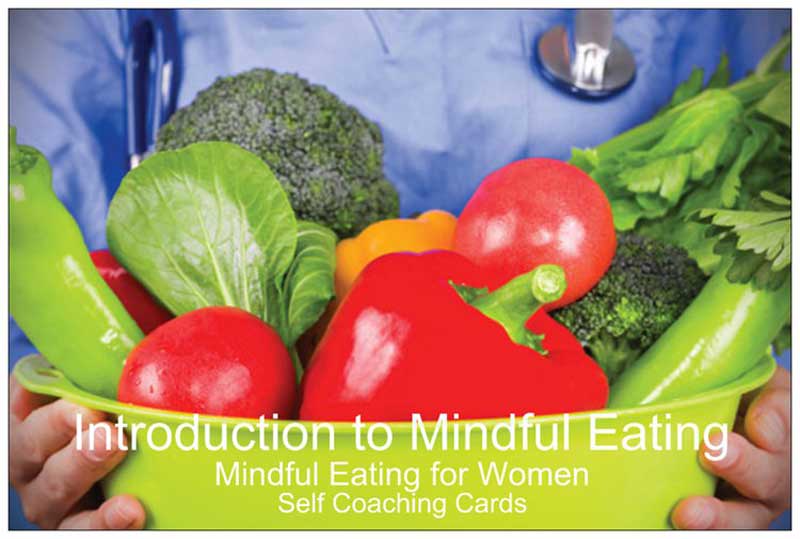
Is Mindful Eating In The Cards For You?
We all know expensive diets that involve buying special foods, drinking shakes or counting points don’t work. So what’s the alternative? Mindful eating is proving to be a breakthrough approach for women who are ready to end the dieting cycle. Here’s why: (more…)
Beyond Intentions

Few of us lose or maintain weight by desire because intentions without a viable game plan are no plan at all. We need an engagement process that offers a new awareness and approach to our love/hate relationship with food. We call this intention implementation system mindful eating. (more…)
Controlled Breathing: A Simple Tool to Manage Stress
 These are stressful times and it makes sense to talk about steps you can take to calm mind and body. Like a change in cabin pressure, the best action is to take care of yourself first so you are available to support others. You do that by partnering with your breath. (more…)
Pre Diabetes Drift
 As boomers drift into old age, their aging metabolism wanders into a precarious state called “pre diabetes.” The American Diabetic Association estimates 50% of boomers are afflicted by this benign sounding diagnosis that silently morphs behind the scenes into full blown- type 2 diabetes. How soon? The data indicates pre diabetics wind up as confirmed type 2 diabetics within 5 years. This is where I found myself a year ago when I became an official “pre.” (more…)
Latest Blog Posts
Blog Categories
Inquiries
Top Blog!